
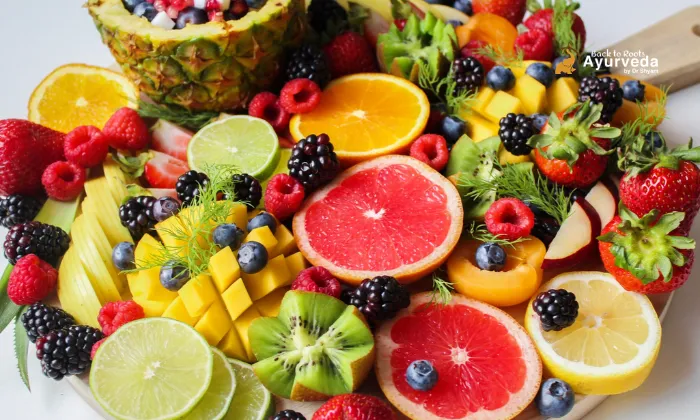
Fruits are naturally rich in vitamins, fiber, antioxidants, and hydration, making them an important part of a healthy lifestyle. However, Ayurveda explains that even healthy foods may disturb digestion when eaten at the wrong time or in the wrong combination.
According to Ayurvedic principles, the best time to eat fruits according to Ayurveda for better digestion depends on your digestive strength, body type, and food timing. Ayurveda focuses strongly on Agni (digestive fire), which plays a major role in how the body digests, absorbs, and utilizes nutrients from fruits.
At Back to Roots Ayurveda in Kerala, Ayurvedic practitioners guide our patients on mindful eating habits that support digestion, gut health, and overall wellness naturally.
Why Timing Matters When Eating Fruits in Ayurveda
Ayurveda believes fruits digest much faster than cooked meals. When fruits are consumed incorrectly, especially after heavy meals, they may remain in the stomach longer than needed and lead to fermentation, bloating, heaviness, and Ama (toxins).
Understanding when to eat fruits in Ayurveda helps support healthy digestion and proper nutrient absorption.
Why fruit timing is important in Ayurveda
- Supports healthy Agni (digestive fire)
- Prevents gas, bloating, and heaviness
- Reduces toxin accumulation
- Helps improve energy naturally
- Supports gut health and metabolism
According to traditional ayurvedic fruit eating rules, fruits are best eaten separately from heavy meals and preferably during the daytime when digestion is strongest.
Best Time to Eat Fruits According to Ayurveda
The best time to eat fruits for digestion is generally between breakfast and lunch or during the early evening before sunset. Ayurveda considers mid-morning the ideal time because digestion is active and capable of processing raw foods effectively.
Eat Fruits on an Empty Stomach
Many people ask, should fruits be eaten on an empty stomach? Ayurveda generally recommends yes, especially for people with healthy digestion.
Benefits may include:
- Better nutrient absorption
- Improved bowel movement
- Natural energy boost
- Reduced heaviness after meals
Fruits eaten alone digest faster and place less burden on digestion.
Eat Fruits Between Meals
Eating fruits as a snack between meals gives the digestive system enough time to process them properly.
This may help:
- Reduce bloating
- Prevent fermentation
- Maintain stable energy levels
- Support healthy metabolism
Eat Fruits Before Exercise
Natural sugars present in fruits provide quick energy before physical activity. Bananas, apples, and dates are commonly preferred before workouts.
Eat Fruits After Exercise Carefully
After exercise, fruits may help replenish fluids and nutrients. However, Ayurveda recommends avoiding extremely cold fruits immediately after workouts.
Avoid Fruits Immediately After Heavy Meals
One of the most important Ayurvedic fruit eating rules is avoiding fruits right after lunch or dinner.
This combination may lead to:
- Gas
- Indigestion
- Acidity
- Sluggish digestion
At Back to Roots Ayurveda Kerala, Ayurvedic practitioners often educate patients about proper food timing as part of natural digestive care.
Is it Good to Eat Fruits on an Empty Stomach?
According to Ayurveda, fruits eaten on an empty stomach may support better digestion because fruits digest quickly compared to cooked foods. However, this depends on individual digestive strength.
Fruits on an empty stomach may help:
- Improve hydration
- Support regular bowel movement
- Provide natural glucose for energy
- Promote lightness in the body
But caution is needed for:
- Acid reflux
- Gastritis
- Sensitive digestion
- Blood sugar imbalance
Acidic fruits like oranges or pineapples may irritate some people when consumed alone.
If you are experiencing ongoing digestive discomfort, personalized care at an Ayurveda Hospital in Kerala may help identify the root cause naturally.
When Not to Eat Fruits According to Ayurveda
Understanding when to eat fruits in Ayurveda is equally important as knowing when not to eat them.
Avoid fruits in the following situations:
- Immediately After Meals: Heavy meals slow fruit digestion and may lead to toxin buildup.
- Late at Night: Ayurveda discourages eating fruits after sunset because digestion slows naturally at night.
- With Milk: Milk and fruits are considered incompatible combinations in Ayurveda.
- During Poor Digestion: Cold, refrigerated fruits may aggravate weak digestion, cough, or congestion.
Common Fruit Eating Mistakes Ayurveda Warns Against
Many digestive problems arise not from fruits themselves, but from incorrect eating habits.
Common mistakes include:
- Mixing too many fruits together
- Eating fruits as dessert after meals
- Drinking fruit-milk smoothies regularly
- Eating refrigerated fruits
- Consuming excessive sweet fruits daily
Ayurveda recommends mindful eating rather than following modern food trends blindly.
If you are looking for a natural holistic digestive care approach, Ayurvedic dietary correction often becomes an important part of treatment.
Best Fruits for Different Doshas
Ayurveda recommends choosing fruits based on your dosha, as every dosha has different nutritional requirements.
For Vata Dosha
Vata individuals benefit from fruits that are grounding, moist, and warming. Since these individuals often have a lighter constitution, sweeter and softer fruits are considered supportive.
Recommended fruits: Mangoes, berries, cherries, and bananas.
Recommended timing: Morning is considered the ideal time for Vata types to eat fruits, as warm and gentle foods suit their digestion best.
For Pitta Dosha
Pitta individuals generally have strong digestion but may experience excess heat or acidity. Cooling and refreshing fruits can help maintain balance and prevent inflammation.
Recommended fruits: Apples, sweet grapes, ripe pears, and melons.
Recommended timing: Eating fruits during the early afternoon is considered suitable because digestion is strongest at that time.
For Kapha Dosha
Kapha individuals usually have slower digestion and benefit from lighter, more astringent fruits that won’t overload their digestion. These fruits are lighter and prevent Kapha from feeling sluggish.
Recommended fruits: Berries, pomegranates, and apples.
Recommended timing: Morning is the best time for Kapha individuals to eat fruits, as this keeps their digestion moving and prevents heaviness.
Seasonal Fruit Eating in Ayurveda
Ayurveda strongly encourages eating local and seasonal fruits because they naturally support the body’s needs during each season.
Food to focus on each seasons
Spring (Vasanta)
- Leafy greens, bitter vegetables, sprouts, fresh herbs, turmeric, ginger, cumin, and black pepper to stimulate digestion and balance Kapha dosha
Summer (Grishma)
- Mangoes, melons, grapes, and tender coconut water to cool the body and reduce Pitta.
Monsoon (Varsha)
- Steamed vegetables, rice, moong dal, asafoetida, pepper, garlic, and ginger to aid digestion and support digestion.
Autumn (Sharad)
- Pomegranates, pumpkins, barley, ghee, sweet, bitter, and astringent foods to pacify Pitta.
Winter (Hemanta/Shishira)
- Root vegetables, sesame seeds, nuts, ghee, cinnamon, nutmeg, cardamom, cloves, black pepper to balance Vata Dosha.
Benefits of eating seasonal foods
- Boosts digestion
- Improves immunity
- Enhances energy
- Supports sustainability
- Promotes mental balance
People visiting an Ayurveda Retreat in Kerala often receive seasonal diet recommendations as part of holistic wellness programs.
Ayurvedic Tips to Improve Fruit Digestion
Following simple Ayurvedic practices may help improve fruit digestion naturally.
Helpful Ayurvedic fruit eating tips
- Eat one type of fruit at a time
- Choose ripe seasonal fruits
- Avoid overeating fruits
- Eat fruits at room temperature
- Avoid fruit and milk combinations
- Maintain regular meal timing
- Practice mindful eating
Lightly cooked fruits like stewed apples or pears are sometimes easier to digest for individuals with weak digestion.
Conclusion
Fruits are highly nourishing, but Ayurveda explains that the right timing and combinations significantly influence their benefits. Understanding the best time to eat fruits according to Ayurveda may help improve digestion, reduce bloating, and support overall wellness naturally. Rather than following temporary diet trends, Ayurveda focuses on strengthening digestion and maintaining balanced Agni for long-term health.
Eating seasonal fruits mindfully, in proper quantities, and at the right time can make a major difference in how the body responds. For personalized guidance on digestion, diet, and holistic healing, consult our experienced Ayurvedic professionals in Kerala today.
Book your consultation today to receive personalized Ayurvedic dietary guidance for digestion and overall wellness.
FAQs
What is the best time to eat fruits according to Ayurveda?
According to Ayurveda, the best time to eat fruits is usually in the morning or between meals when digestion is active. Fruits are best eaten separately from heavy meals for better absorption.
Can fruits be eaten after meals in Ayurveda?
Ayurveda generally discourages eating fruits immediately after meals because fruits digest faster than cooked foods. This may lead to fermentation, gas, and heaviness.
Is it good to eat fruits at night?
Eating fruits late at night is usually not recommended in Ayurveda because digestion slows after sunset. Sweet fruits at night may increase Kapha and mucus formation.
Which fruits are easiest to digest in Ayurveda?
Ripe seasonal fruits like apples, pears, grapes, pomegranates, and ripe bananas are generally considered easier to digest. Lightly cooked fruits may also support weak digestion.
Can fruit combinations disturb digestion?
Yes, Ayurveda believes improper fruit combinations may weaken digestion and create Ama (toxins). Mixing fruits with milk or heavy meals is especially discouraged.