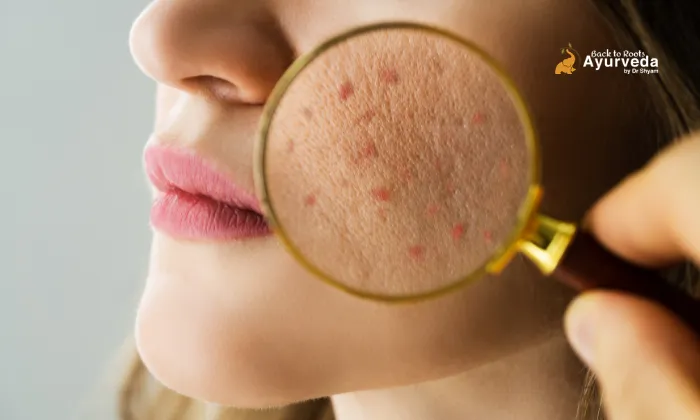
Fungal acne is a common skin condition that often returns again and again when only the surface symptoms are treated. In Ayurveda, skin problems are viewed as signs of internal imbalance involving digestion, toxins (Ama), and disturbed doshas. Poor gut health, excess heat, and oily skin conditions can support fungal growth and recurring breakouts.
At Back to Roots Ayurveda Kerala, fungal acne treatment focuses on correcting the root cause naturally through herbs, diet, detox therapies, and lifestyle corrections. This holistic approach helps calm the skin, improve digestion, and support long-term skin health.
Struggling with acne issues? Book your consultation today.
What is Fungal Acne?
Fungal acne is a skin condition caused by the overgrowth of a yeast called Malassezia. This yeast naturally lives on the skin, but when it multiplies excessively and enters the hair follicles, it can trigger inflammation and breakouts. The condition is also called Malassezia folliculitis or Pityrosporum folliculitis.
Fungal acne usually appears as small, itchy red bumps that form in clusters. These bumps may look similar to regular acne, which is why many people confuse the two conditions.
Fungal acne is more common in teenagers and young adults, especially people with oily skin. It can also occur more often in hot, humid weather or in people who sweat heavily.
Difference Between Fungal Acne and Regular Acne
Although both conditions may appear similar, fungal acne and regular acne differs in:
Fungal Acne
- Caused by yeast growing inside hair follicles.
- Usually appears as small bumps of similar size.
- It often feels itchy.
Regular Acne
- Caused by clogged pores, bacteria, excess oil, and dead skin cells.
- Pimples can vary in size.
- Usually it does not itch.
Many people mistakenly use regular acne products for fungal acne. However, fungal acne requires a different approach because yeast is the main cause.
Symptoms of Fungal Acne
Common symptoms include:
- Small red bumps or whiteheads
- Itchy acne-like eruptions
- Burning sensation
- Clusters of similar-looking pimples
- Skin irritation on the forehead, chest, shoulders, or back
If symptoms continue for a long time, seeking support from an experienced Ayurvedic treatment centre in Kerala may help identify the root cause naturally.
Common Triggers
Several factors can increase fungal growth on the skin:
- Hot and humid weather
- Excessive sweating
- Tight clothing
- Oily moisturisers or sunscreens
- Frequent touching of the face
- Antibiotic overuse
- Poor hygiene after workouts
- Weak digestion and toxin buildup
- Stress and poor lifestyle habits
Heavy oil-based skincare products may worsen fungal acne because they create an environment where yeast grows easily.
Fungal Acne in Ayurveda: Understanding the Root Cause
According to Ayurveda, fungal acne is linked to Dadru Kushta, a skin disorder associated with imbalances in Pitta and Kapha doshas. Kapha creates excessive oiliness and moisture on the skin, while aggravated Pitta contributes to redness, itching, irritation, and inflammation.
Ayurveda also explains that poor digestion (Mandagni) leads to toxin accumulation called Ama. These toxins block body channels (Srotas) and affect healthy skin function. This is why Ayurveda strongly connects gut health and skin health.
At Back to Roots Ayurveda Kerala, the focus is not only on managing visible acne but also on correcting digestion, reducing toxins, balancing doshas, and supporting healthy skin from within.
Fungal Acne Treatment in Ayurveda
At Back to Roots Ayurveda, Fungal acne treatment follows a holistic method that aims to:
- Balance Pitta and Kapha doshas
- Improve digestion
- Reduce Ama (toxins)
- Calm skin inflammation
- Support long-term skin health naturally
Instead of suppressing symptoms temporarily, Ayurveda focuses on root-cause healing.
Treatment plans may include:
- Herbal medicines
- Panchakarma therapies
- Detoxification methods
- Skin-supportive applications
- Diet correction
- Lifestyle guidance
At Back to Roots Ayurveda Kerala, personalised therapies are offered based on the individual’s body constitution and skin condition.
You may also explore our Ayurvedic Therapy in Kerala for holistic skin wellness support.
Ayurvedic Herbs Used for Fungal Acne
Several traditional herbs are used for fungal acne management.
- Neem: Known for strong antimicrobial and skin-purifying properties.
- Turmeric: Helps reduce inflammation and supports healthy skin healing.
- Manjistha: Traditionally used for blood purification and skin detoxification.
- Aloe Vera: Provides cooling and soothing support for irritated skin.
- Tulsi: Supports natural skin cleansing and microbial balance.
- Khadira: Traditionally used in Ayurveda for skin detoxification.
- Triphala: Supports digestion and toxin elimination, helping reduce internal causes of fungal acne.
These herbs are commonly included in ayurvedic treatment for fungal acne plans at Back to Roots Ayurveda Kerala.
Ayurvedic Therapies That May Support Fungal Acne Relief
Ayurvedic therapies for fungal acne focus on reducing skin inflammation, detoxifying blood, and applying antifungal herbs.
- Lepa Chikitsa: Application of herbal pastes like neem and turmeric to calm irritated skin.
- Kashaya Dhara: Medicated herbal decoctions are poured over affected areas to soothe itching and inflammation.
- Virechana: A Panchakarma detox therapy that helps eliminate excess Pitta toxins from the body.
- Nasya: Nasal therapy that may support Kapha and Pitta balance in persistent facial acne.
- Internal Herbal Medicines: Specific formulations may be recommended to support digestion, detoxification, and skin balance.
If you are looking for a trusted Ayurveda Hospital in Kerala for chronic skin concerns, our physicians at Back to Roots Ayurveda will support long-term healing naturally.
Diet Tips in Ayurveda for Fungal Acne
Diet plays an important role in fungal acne Ayurveda management.
Foods to Include
- Bitter vegetables like bitter gourd and fenugreek
- Cooling foods such as cucumber and bottle gourd
- Whole grains
- Warm herbal water
- Turmeric, garlic, ginger, and coriander
Foods to Avoid
- Excess sugar and refined carbohydrates
- Fermented foods
- Excess dairy products
- Oily and processed foods
- Sour foods mixed with milk
Ayurveda believes that proper digestion is essential for healthy skin. Correcting food habits may help reduce recurring fungal flare-ups naturally.
Lifestyle Habits to Calm Fungal Acne Naturally
Simple lifestyle changes can help prevent fungal acne from worsening.
Helpful Habits
- Shower after sweating
- Wear loose cotton clothing
- Keep the skin dry and clean
- Avoid reusing sweaty clothes
- Change pillow covers regularly
- Use gentle, non-oily skincare products
- Reduce stress through proper sleep and routine
Back to Roots Ayurveda Kerala also encourages lifestyle correction as part of a complete natural skin healing approach.
Common Mistakes That Can Worsen Fungal Acne
Many people unknowingly worsen fungal acne through daily habits.
Common Mistakes
- Using oil-heavy skincare products
- Overusing antibiotics
- Ignoring digestion issues
- Wearing tight synthetic clothing
- Skipping hygiene after workouts
- Using harsh acne products continuously
- Eating excess sugar and processed foods
Identifying these triggers is important for successful natural remedies for fungal acne support.
When to Consider Ayurvedic Support for Persistent Fungal Acne
You may consider Ayurvedic care if:
- Fungal acne keeps returning
- The skin feels itchy, inflamed, or irritated frequently
- Conventional treatments provide only temporary relief
- Digestive issues occur alongside skin problems
- Stress triggers breakouts often
Ayurveda supports calming fungal acne by addressing internal imbalance instead of only suppressing surface symptoms. By improving digestion, balancing Pitta and Kapha doshas, reducing toxins, and supporting healthy skin naturally, Ayurvedic treatment offers long-term wellness support for recurring fungal acne. Herbal remedies, Panchakarma therapies, diet correction, and lifestyle guidance work together to improve overall skin health from within.
Book Your Consultation Today
Looking for the best Ayurvedic clinic for skin in Kerala or a natural approach to recurring fungal acne?
Visit Back to Roots Ayurveda Kerala for holistic skin care support focused on internal healing, detoxification, and natural skin balance.
FAQ Section
Can Ayurveda help fungal acne naturally?
Yes, Ayurveda may help manage fungal acne naturally by addressing internal imbalances like excess Pitta, Kapha, and toxin buildup (Ama). It focuses on digestion, detoxification, herbal support, diet, and lifestyle changes to support long-term skin health.
Which herbs are used in Ayurvedic fungal acne treatment?
Common herbs used in Ayurvedic treatment for fungal acne include Neem, Turmeric, Manjistha, Tulsi, Aloe Vera, Khadira, and Triphala. These herbs are traditionally valued for their skin-purifying, soothing, and detoxifying properties.
Can diet affect fungal acne according to Ayurveda?
Yes, Ayurveda believes diet plays an important role in fungal acne and overall skin balance. Excess sugar, fermented foods, oily foods, and poor digestion may worsen fungal growth and skin irritation.
Is fungal acne linked to gut imbalance?
According to Ayurveda, fungal acne can be connected to poor digestion and toxin buildup known as Ama. Weak digestive fire (Mandagni) may affect skin health and contribute to recurring breakouts.
Can Panchakarma help with skin detox?
Ayurvedic Panchakarma therapies like Virechana may help support internal detoxification and balance excess Pitta in the body. These therapies are traditionally used to support healthy skin and reduce recurring skin concerns naturally.